Posts

Showing posts with the label currency

Why Gold Behave Differently this Round? (May 2012)

Image
When market sentiment was bearish, equities market would slump, just like what we seen for past few days. Global markets suffered yet another blow due to the uncertainties surrounding EU, where Greece may potentially exit European Union. Would Greece finally exit EU? This is an interesting yet important questions for investors. The headlines have been on the EU crisis recently, overshadowing the highly speculated Malaysia general election's date. Well, now would be a tough time for our Prime Minister to call on an election amid the gloomy global outlook. Maybe, the best time to hold an election already gone!!! Anyway, another interesting issue was the slump in Gold prices. Curiously, many investors questioning the different trend for gold prices. Normally, it will spike up along with the risk level of global equities market, together with USD. Theoretically, gold and USD would over-perform other asset classes during bad times. Yes, USD had already appreciated against a basket of c...

New Fund: Hong Leong Hong Kong Equity Optimizer Fund

Image
Finally, there is a new fund from Hong Leong Asset Management (HLAM). The fund is designed to capture the vibrant growth of the Hong Kong capital market. The Hong Kong market has one of the world's leading securities exchange in the Asian region which is one of the fastest growing capital markets by market activity and new listings Hong Kong, dubbed as Asia's most liquid exchange, acts as a key platform in the internalization of the Renminbi (RMB) currency. This allows investors to participate in the RMB appreciation potential via investments in equities and bonds. The new Hong Leong Hong Kong Equity Optimizer Fund, being a growth fund, will invest primarily in equities and equity-related securities that are listed on the Hong Kong Exchange. Meanwhile, the balance may be invested in domestic and Hong Kong fixed income securities. To achieve its investment objective, the Fund adopts an actively managed investment strategy which may include investment in common stock and deposi...

New Fund: OSK-UOB Multi-Asset Recovery Strategy Fund

Image
With the ongoing global economic recovery and the various opportunities created from the vast stimulus packages put forth by governments around the world, we are currently witnessing differing levels of economic expansion across all economies. And different asset classes such as equities, bonds, commodities, currencies and cash perform differently under different stages of economic expansion. Hence, OSK-UOB now offer investors a fund that will capitalize on the potential opportunities arising from the different market conditions resulting from this economic expansion phase by dynamically investing in multi-asset classes that are expected to do well in specific market conditions. The OSK-UOB Multi-Asset Recovery Strategy Fund is a fund-of-funds which aims to achieve long term capital appreciation by investing in a portfolio of exchange traded funds (ETFs). The fund aims to achieve its objective through a portfolio of ETFs chosen from 5 major asset classes , i.e equities, bonds, commod...

3 Hints given by BNM (16 May 2011)

Image
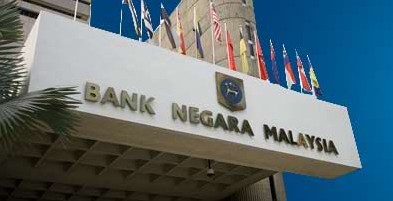
Bank Negara Malaysia (BNM) hiked the OPR by 25bps to 3% on 5 May as what some analysts said " Surprising ". The OPR hike was a pre-emptive strike on inflation pressures as the output gap closes. Many analysts are expecting hikes to resume only in July as inflation remains largely supply side driven. However, BNM seems to act before demand pull pressures dominate and before the output gap turns positive. In our view, the OPR and SRR hike is indicating two things here. Hints #1 Inflation is going to threaten the Malaysian economy in the near-term (at least). Recent increase in prices of petrol and sugar will further accelerate the numbers. With ongoing efforts by Government to reduce the subsidies, inflation numbers for sure will gone up. Citi Research: Regional Policy Rates as at 10th May 2011 Hints #2 Related to inflation also, BNM is trying to reduce the increasing food and resources prices. If we can reduce the import price, by having a stronger currency, this would be a wi...

Extractions from BNM monetary policy statement

Image
As expected, Bank Negara Malaysia (BNM) decided to maintain the Overnight Policy Rate (OPR) at 2.75% yesterday. This was the 3rd time in a row that BNM left it unchanged. Are there any hints by BNM on Malaysia's economy this year? We can explore the "hidden messages" from the monetary policy statement as below: Regional Front: While advanced economies continue to register modest growth, most emerging economies have experienced strong growth. For Asian region, domestic economic activity continues to support the growth momentum amid weaker external demand. Shifts in global liquidity have resulted in significant capital flows into the emerging economies , in particular, Asian region, and have brought with it risks to macroeconomic and financial stability. The region is also being affected by global inflationary pressure arising from the higher commodity and food prices. On Malaysia: Recent indicators point towards a sustained expansion in private sector activity. External...

Why ASEAN will failed to host World Cup?

Image
It was reported that ASEAN, which comprises Brunei, Cambodia, Indonesia, Laos, Myanmar, Philippines, Singapore, Thailand, Vietnam and Malaysia, is going big in World Cup. Since all of these countries did not manage to qualify on the pitch, they're going through back-doors. ASEAN is going to bid for FIFA World Cup 2030 !!! Wow... When I first heard about this news, I am very excited. But, after calming down and figured it out, I doubt ASEAN could succeed in bidding the world's most popular event because of the following reasons. Second surprise came, when Malaysia was said to lead the pack for the bidding. Malaysia, the unlikely team which became the winner of ASEAN cup recently, may found ourselves " syok sendiri ". Common Sense Our level is nowhere near the World Cup level. Although we still have plenty of time before 2030, ASEAN needs much efforts to up the level, at least on par with South Korea. To select a team who represents all the hosting countries, it would ...

Top 3 Commodity Picks for 2011

Image
Forget about supply and demand issue of commodity, everyone knows the main mover now is Emerging Market, especially China. As long as US economy not yet recovered, China was expected to continue its great appetite to consume commodities globally. Not for its consumptions, but mainly because of China's currency management. China, already the largest creditor of US by holding USD which was slipping with a series of quantitative easing programs, would definitely forced China to diversify its holding elsewhere. However, China would hand-picking according to its own local demand. As such, Finance Malaysia forecasts those commodities which were used heavily in construction , infrastructure , production will continue to perform in 2011.   Top pick #1: Palladium One in four goods manufactured today either contain platinum group metals or the platinum group metals play a major role during their manufacturing process. Palladium was used in many electronics including computers, mobile phones,...

Why China raise interest rate? And, what's the effect?

Image
Yesterday, China surprisingly raised its interest rate by 0.25%  as follows: - 1 year lending rate from 5.31% to 5.56% - 1 year deposit rate from 2.25% to 2.50% Why China raise interest rate? 1. To cool down the over-heating property sector. 2. Combat inflation 3. Low liquidity in the banking system While inflation was hovering around 3.5% currently, even though the deposit rate has been raised, the net real interest rate is still in negative territory (3.5% - 2.5% = -1.0%). This is one of the main reason why Chinese were going all out to invests, especially in real-estate, due to its low yield if sitting in the bank (even lower than Malaysia). However, China would be facing another problem... Raising interest rate would attract capital inflows , which could dampen the purpose of containing inflation. Foreign investors view Chinese renmimbi as undervalue , mainly due to interventions by Chinese government. The latest news could ignite a fresh round of thoughts,...

Malaysia to curb capital inflows?

Image
Due to weakening USD and record low-interest rate in the US, Europe and Japan, emerging markets have been a popular spot for excessive liquidity to park their money. Main reasons being: Emerging markets are the fastest growing economies currently Emerging countries are having  higher interest rate Banking system of emerging countries are stronger (safer) While develop countries are facing a currency downfalls, emerging countries are experiencing continuous inflow of hot money. This in turn causing a chaotic in currency exchange market, where emerging countries' currencies are hitting years high against developed nations. The imbalance forex market prompt central banks around the world to act or to curb any excessive flows of money which could jeopardised a particular countries, like 1997 Asian financial crisis. In the latest developments on this hot topic, Thailand announced a  15% withholding tax on interests and capital gains on Thai bonds. I...