Posts

Showing posts with the label liquidity

The end of Europe’s liquidity crisis? (Dec 2011)

Image
Well, many people already bored with the on-going Europe debt crisis, and subsequently liquidity crisis. This is like what we have seen in 2008 when Lehman Brothers collapses, which drags down the whole financial systems globally through liquidity crisis. The different is between company and country. Maybe some of us doesn't know how this chain effects rattles the global markets. So, let us start here. The European Organisation chart of Debts The root of the problem plaguing the market right now is Europe debt crisis , where Greece and few other European countries were highly in debts. They just simply cannot generate enough revenue (taxes) to support the economy itself. So, they resorted to seek for funding via borrowing by issuing sovereign bonds to finance their day to day operations. However, the debt is piling up intensively after 2008 global financial crisis until recently. Because the government does not have money, their bonds may go into default. So, they were forced ...

What is Statutory Reserve Requirement (SRR)?

Image
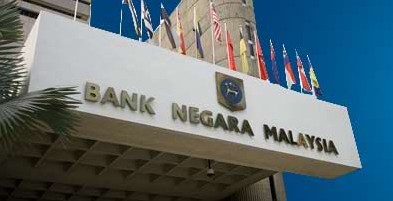
Everyone is buzzing about SRR lately, since Bank Negara Malaysia's statement which stated its intention to raise SRR in the near future. Actually, what is SRR? And, what is the effect of higher SRR imposed? Why BNM using SRR right now? Finance Malaysia hopes to clear everyone's doubt and would appreciate if you can share this out. What is SRR? Statury Reserve Requirement is a monetary policy instrument available to Bank Negara Malaysia (BNM) for the purposes of liquidity management. Effectively, banking institutions namely commercial banks, merchant/investment banks and Islamic banks are required to maintain balances in their Statutory Reserve Accounts (SRA) equivalent to a certain proportion of their eligible liabilities (EL), this proportion being the SRR rate. Why BNM uses the SRR as its "tool"? Since SRR is available to BNM to manage liquidity and hence credit creation in the banking system, it was used to withdraw or inject liquidity when the excess or lack of...

EPF declares 5.8% dividend rate for 2010

Image
For the financial year ended 31 December 2010, Employees Provident Fund (EPF) announced a 5.8% dividend rate. This translates into RM21.61 billion, which is the highest dividend payout amount ever to members, an increase of 11.55% over the 2009 dividend payout of RM19.37 billion. For the year 2009, the dividend rate is 5.65%. "The remarkable investment income achieved in 2010 was especially driven by the performance of equity investments. The improved financial and economic conditions provided the market with sufficient liquidity, allowing profit taking activities throughout the year", said EPF chairman in statement issued. Who is the main contributor? Buoyed by a good year for the equities market, equities were the largest contributor to the EPF's gross investment income in 2010, representing 45.45% of EPF's total gross investment income. ( See Table 1 ) Source: EPF website During the year under review, EPF total investment assets also continued to register healt...

Extractions from BNM monetary policy statement

Image
As expected, Bank Negara Malaysia (BNM) decided to maintain the Overnight Policy Rate (OPR) at 2.75% yesterday. This was the 3rd time in a row that BNM left it unchanged. Are there any hints by BNM on Malaysia's economy this year? We can explore the "hidden messages" from the monetary policy statement as below: Regional Front: While advanced economies continue to register modest growth, most emerging economies have experienced strong growth. For Asian region, domestic economic activity continues to support the growth momentum amid weaker external demand. Shifts in global liquidity have resulted in significant capital flows into the emerging economies , in particular, Asian region, and have brought with it risks to macroeconomic and financial stability. The region is also being affected by global inflationary pressure arising from the higher commodity and food prices. On Malaysia: Recent indicators point towards a sustained expansion in private sector activity. External...

2011 Malaysia Outlook: Sunshine to Sunset

Image
By Finance Malaysia, Driven by better economy prospects, Malaysia successfully escape recession two years ago, particularly March 2009. Strong GDP growth and numerous government's initiatives is the main reason why local market experiencing a spectacular run-up since then. Today, our KLCI break another record high , by closing at 1551.89 points. So, what is the outlook for Malaysia in 2011? Maybank expects KLCI will hit 1,700 mark in 201 1 KLCI The Malaysia Index will continue to perform in line with the overall economy. More IPO will be issue. More merger & acquisitions activities will be seen. KLCI will be driven by the following factors:- Improving sentiment Follow through momentum from all time high Hot capital inflows Improving liquidity Boost by plantation and oil & gas heavyweights, such as IOI, Sime and PetroChem Preferred sector(s)... Finance sector will continue to do well in line with the economy 2011 will be a "Grammy Awards" show for construction ...

Understanding Exchange Traded Fund (ETF)

Image
What is an Exchange-Traded Fund (ETF)? An ETF is an open-ended investment fund listed and traded on a stock exchange , which aims to track the performance of an index and to provide access to a wide variety of markets and asset classes. By holding a basket of individual securities, an ETF allows an investor to expose to many companies or fixed income securities with one single trade. Benefits of Investing in ETFs... Prices are available throughout the day (according to trading time of Bursa Malaysia) Flexibility and Liquidity, due to combination of trading on an exchange and the continuous offering of units Transparent portfolio. Investors will know exactly what stocks they are investing in Diversification Lower management costs as compared to mutual funds How is the pricing of an ETF done? The market price of units in the ETF is subject to supply and demand. Although Net Asset Value (NAV) of the ETF will approximate the trading value of the underlying securities held plus any undist...

China's banking stocks... Your next destination?

Image
While Malaysian market is hovering around 1,500 points, a ground survey shows that local investors are skeptical about the sustainability of our market. Bursa Malaysia's website shows that local retail participation is merely at 25% daily. Maybe, we could look aboard to find some other investing options. And, China's banking stocks could suit investors appetite for the following reasons:- China was an under-performer this year China's banks should report better profits Robust loan demand Due to the higher interest rate being announced recently, banks of China should experienced expansion of net interest margin for the next few quarters. Although loan growth is moderating now, it was still high, and will continue as long as China's economy is growing. We can't deny that China is the world's engine of growth currently, in which we persist for the next few years, at least. Will China raise rate again? Depending how fast and big the housing bubble was, China wou...

Why China raise interest rate? And, what's the effect?

Image
Yesterday, China surprisingly raised its interest rate by 0.25%  as follows: - 1 year lending rate from 5.31% to 5.56% - 1 year deposit rate from 2.25% to 2.50% Why China raise interest rate? 1. To cool down the over-heating property sector. 2. Combat inflation 3. Low liquidity in the banking system While inflation was hovering around 3.5% currently, even though the deposit rate has been raised, the net real interest rate is still in negative territory (3.5% - 2.5% = -1.0%). This is one of the main reason why Chinese were going all out to invests, especially in real-estate, due to its low yield if sitting in the bank (even lower than Malaysia). However, China would be facing another problem... Raising interest rate would attract capital inflows , which could dampen the purpose of containing inflation. Foreign investors view Chinese renmimbi as undervalue , mainly due to interventions by Chinese government. The latest news could ignite a fresh round of thoughts,...

Malaysia to curb capital inflows?

Image
Due to weakening USD and record low-interest rate in the US, Europe and Japan, emerging markets have been a popular spot for excessive liquidity to park their money. Main reasons being: Emerging markets are the fastest growing economies currently Emerging countries are having  higher interest rate Banking system of emerging countries are stronger (safer) While develop countries are facing a currency downfalls, emerging countries are experiencing continuous inflow of hot money. This in turn causing a chaotic in currency exchange market, where emerging countries' currencies are hitting years high against developed nations. The imbalance forex market prompt central banks around the world to act or to curb any excessive flows of money which could jeopardised a particular countries, like 1997 Asian financial crisis. In the latest developments on this hot topic, Thailand announced a  15% withholding tax on interests and capital gains on Thai bonds. I...

Why Malaysian market keeps going up?

Image
Recently, I personally have a chance to met up with some businessman from different industries. When we chat about business, they said " very competitive la ". When we chat about economy, they said " still very uncertain eh ". When we chat about KL market, they said " why keeps going up ahhhh? ". While newspaper and media are reporting a slew of  news regarding Euro debts problems, US high unemployment, Japanese deflation, and China's scary property bubbles, our market charging ahead unobstructed. In contrast, Ringgit is heading to a fresh 13 -year high against USD, KLCI is trying to out-beat its highest ever level, surpassing the pre-crisis level now. Although our economy was not as good as pre-crisis, our KLCI did. Why? Malaysia to gain from world's liquidity... Taking a macro-economic view, this is all due to the liquidity that the world governments created to rejuvenate their economies out from the 2008 recession. Actually, we are one of the b...