Posts

Showing posts with the label opr

CIMB: Domestic Drivers to steady the ship in 2012

Image
CIMB research remain cautious on Malaysia's growth outlook for 2012 as several factors will put the brakes on growth - slower export growth due to the fragile western economies as well as slower consumption and investment growth due to heightened uncertainty and volatile financial markets. The implementation of ETP and stimulus measures cannot take up all the slack left by weak exports. Slowing growth, rising risks We expect GDP growth to slow to 3.8% in 2012 from an estimated 5% in 2011. The factors that shape the prognosis are: continuing weak global growth, pressured by volatile financial markets and Europe's sovereign debt worries; a downturn in Malaysia's export cycle; an expected slowing of consumption and investment due to worries over economic conditions What to expect in 2012? While not forecasting a global recession, a combination of fiscal tightening and a potential bigger financial shock from the debt crisis are expected to result in weaker global growth in 201...

Key Highlights of BNM 3Q11 Report

Image
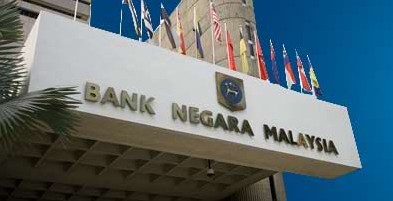
Titled as " ECONOMIC AND FINANCIAL DEVELOPMENTS IN MALAYSIA IN THE THIRD QUARTER OF 2011 ", Bank Negara Malaysia (BNM) review some interesting facts on the status of our economy and the market outlook going forward. The announcement was chaired by Central Bank's governor to address the media after the closing of Bursa Malaysia. Growth improved in the third quarter Despite the challenging environment, Malaysian economy registered a higher growth of 5.8% (2Q11: 4.3%), due to stronger domestic demand. The robust  domestic demand was driven by an  expansion in both household and business spending as well as higher public  sector expenditure.  Manufacturing sector  recording a significantly better performance supported by firm regional  demand for resource-based products, coupled with the normalisation in supply chain disruptions arising from the Japan natural disaster. The headline inflation rate , as measured by the change in the Consumer Price...

How to invest during HIGH Inflation era? (Sept 2011)

Image
What is the main risk for Asian economy? None other than Inflation . Across the region, fast-growing countries such as Singapore, Indonesia, India and China are reporting faster than expected price increases in tandem with their economic success. To fight inflation, many countries already carried out their tools of tightening. We have Singapore who fights imported inflation via stronger currency. Meanwhile, other countries are going for the traditional way of hiking interest rate and increasing bank reserve requirement since last year. At first, Bank Negara Malaysia called it as "normalization", but it seems to be "containerization" going forward to contain inflation. Who's fault? There are 2 causes for the problem, which I categorized them into international and national. Among the international contributing factors were: Loose monetary policies practiced by US and Europe, who slashes interest rate to almost zero and carried out large scale of asset purchases...

3 Hints given by BNM (16 May 2011)

Image
Bank Negara Malaysia (BNM) hiked the OPR by 25bps to 3% on 5 May as what some analysts said " Surprising ". The OPR hike was a pre-emptive strike on inflation pressures as the output gap closes. Many analysts are expecting hikes to resume only in July as inflation remains largely supply side driven. However, BNM seems to act before demand pull pressures dominate and before the output gap turns positive. In our view, the OPR and SRR hike is indicating two things here. Hints #1 Inflation is going to threaten the Malaysian economy in the near-term (at least). Recent increase in prices of petrol and sugar will further accelerate the numbers. With ongoing efforts by Government to reduce the subsidies, inflation numbers for sure will gone up. Citi Research: Regional Policy Rates as at 10th May 2011 Hints #2 Related to inflation also, BNM is trying to reduce the increasing food and resources prices. If we can reduce the import price, by having a stronger currency, this would be a wi...

Extractions from BNM monetary policy statement

Image
As expected, Bank Negara Malaysia (BNM) decided to maintain the Overnight Policy Rate (OPR) at 2.75% yesterday. This was the 3rd time in a row that BNM left it unchanged. Are there any hints by BNM on Malaysia's economy this year? We can explore the "hidden messages" from the monetary policy statement as below: Regional Front: While advanced economies continue to register modest growth, most emerging economies have experienced strong growth. For Asian region, domestic economic activity continues to support the growth momentum amid weaker external demand. Shifts in global liquidity have resulted in significant capital flows into the emerging economies , in particular, Asian region, and have brought with it risks to macroeconomic and financial stability. The region is also being affected by global inflationary pressure arising from the higher commodity and food prices. On Malaysia: Recent indicators point towards a sustained expansion in private sector activity. External...

Malaysia to curb capital inflows?

Image
Due to weakening USD and record low-interest rate in the US, Europe and Japan, emerging markets have been a popular spot for excessive liquidity to park their money. Main reasons being: Emerging markets are the fastest growing economies currently Emerging countries are having  higher interest rate Banking system of emerging countries are stronger (safer) While develop countries are facing a currency downfalls, emerging countries are experiencing continuous inflow of hot money. This in turn causing a chaotic in currency exchange market, where emerging countries' currencies are hitting years high against developed nations. The imbalance forex market prompt central banks around the world to act or to curb any excessive flows of money which could jeopardised a particular countries, like 1997 Asian financial crisis. In the latest developments on this hot topic, Thailand announced a  15% withholding tax on interests and capital gains on Thai bonds. I...

Why Ringgit is so strong now?

Image
Recently, many of my friends asking me why Ringgit suddenly is rising so fast in value? Well, this is not a bad question though for Malaysians. In contrast, for those who working overseas, and converting to Ringgit regularly, would become poorer as a result. In fact, many Malaysians working in Singapore especially, might think that RM is generally weakening against SGD over the long-term. It's TRUE if you are saying since "Dot-Com" burst.  Could this be a turning point now? From the graph above, it shows clearly that the trend of decreasing value of SGD against RM. Reasons being that optimism of Malayisan economy is going to grow faster than many predicted. This has whetted foreign investors' appetite for local assets, including stocks and bonds. World Bank recently raised its forecast for Malaysian economy to grow at a faster rate of 5.7% this year, compared with its earlier forecast of 4.1% made in November. As a result, local equity and bond markets are ...